Purchase order systems streamline procurement, helping organizations manage approvals, track spend, and improve supplier collaboration. By automating repetitive tasks, they reduce errors and accelerate workflows from requisition to payment. With real-time visibility, teams can forecast needs, enforce compliance, and optimize inventory. Implementing robust purchase order systems also enhances data analytics, enabling smarter budgeting and cost control. For more information, explore this resource: https://cloudb2b.co.uk/. Investing in modern solutions boosts efficiency, accuracy, and financial governance across the supply chain.
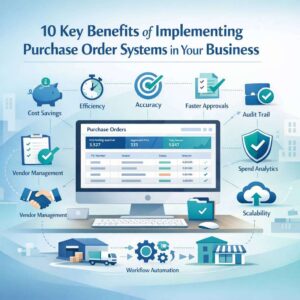
In today’s competitive landscape, organisations of all sizes can gain a significant edge by systemising procurement through a robust purchase order (PO) process. A well-implemented po software not only automates routine tasks but also provides strategic visibility into spend, supplier performance, and budgeting. Below are ten key benefits of adopting a cloud based purchase order system and how it can transform procurement operations for UK businesses and beyond.
Improved spend control and budgeting
A purchase order system UK organisations rely on helps establish clear spend controls. By enforcing PO requirements before any purchase is authorised, businesses reduce maverick buying and ensure all expenditures align with approved budgets. Real-time visibility into outstanding POs, committed versus actual spend, and departmental limits empowers finance teams to forecast accurately and maintain healthy cash flow.
Centralised procurement data
With an online purchase order system, all PO data resides in a single, searchable repository. This centralisation simplifies audits, supplier evaluations, and reporting. Stakeholders can quickly access PO history, terms, delivery dates, and invoicing details, enabling more informed sourcing decisions and stronger supplier relationships.
Enhanced supplier collaboration
A cloud based purchase order system promotes better communication with suppliers. Suppliers can receive PO details instantly, confirm receipts, and provide electronic invoicing. This collaborative workflow reduces miscommunications, shortens cycle times, and improves reliability in delivery and payment timelines. For organisations using multiple suppliers, the consistency of PO formats and data standards is a notable efficiency gain.
Increased processing speed and reduced administrative overhead
Automating the PO lifecycle—from creation through approval to dispatch and receiving—streamlines procurement tasks. Purchase ordering software eliminates manual data entry, speeds up approvals with predefined workflow rules, and reduces the need for paper-based processes. As a result, staff can redeploy time to higher-value activities, such as supplier evaluation and strategic sourcing.
Purchase order systems streamline procurement, reducing manual errors and speeding approvals across departments. An effective system centralizes requests, tracks status, and improves budgeting insights for stakeholders. Users can automate repeat orders, set alerts for approvals, and generate comprehensive audit trails. By integrating with suppliers and accounting software, purchase order systems enhance visibility and control over spend. For more details, visit the resource linked in the second half: https://procurement.colostate.edu/purchase-order-faq-2/.
Enhanced compliance and risk management
A structured PO process enforces organisational policies and regulatory requirements. By embedding approval workflows, mandatory fields, and supplier vetting, a PO system UK businesses rely on helps ensure compliance with internal controls and external standards. Automated audit trails also simplify regulatory reporting and internal governance.
Improved accuracy and reduced errors
Errors in manual PO creation—such as incorrect item descriptions, prices, or supplier details—can lead to disputes and delayed payments. A dedicated purchase order software enforces data validation, standardised formats, and electronic reconciliation with invoices. This results in higher accuracy, fewer exceptions, and smoother financial close cycles.
Better cash flow and supplier terms
Negotiating favourable payment terms is a common procurement objective. A robust purchase order system supports early payment discounts, staged approvals, and clearer invoice matching. By providing timely, accurate POs and automated reminders, organisations can optimise payment schedules, strengthen supplier relationships, and improve working capital management.
FAQ: Purchase Order Systems
What is a purchase order system?
A purchase order system is a structured process and software solution that manages the creation, approval, tracking, and fulfillment of purchase orders (POs). It helps organisations automate procurement, enforce controls, and maintain accurate spend visibility.
Why should my business use a purchase order system?
Benefits include streamlined requisition-to-pay workflows, reduced manual errors, better budget control, faster supplier onboarding, improved audit trails, and enhanced data for strategic sourcing decisions.
What features should I look for in a purchase order system?
Key features include:
- PO creation and customization
- workflow approvals and routing rules
- supplier management and onboarding
- real-time budget visibility and spend tracking
- PDF/EDI/integration options for supplier systems
- receipt and invoice matching (3-way matching)
- audit trails and compliance reporting
- integration with ERP, accounting, and inventory systems
- mobile access and user permissions
How does a purchase order system differ from an invoicing system?
A PO system focuses on request, approval, and issuing purchase orders before goods or services are received. Invoicing systems handle matching and paying supplier invoices after delivery. An integrated procure-to-pay solution connects both sides for end-to-end control.
What is 3-way matching, and why is it important?
3-way matching compares the PO, the supplier invoice, and the receiving document (goods receipt) to ensure consistency before payment. It helps prevent overpayments, duplicate payments, and discrepancies.
Can a purchase order system integrate with my ERP or accounting software?
Yes. Most PO systems offer integrations with popular ERPs (e.g., SAP, Oracle, Microsoft Dynamics) and accounting platforms to synchronise POs, receipts, invoices, and financial postings, reducing data entry and errors.
How long does implementation typically take?
Implementation duration varies by complexity, data readiness, and integration needs. A basic setup might take a few weeks, while larger deployments with custom workflows and ERP integrations can take several months. Planning, data cleansing, and stakeholder training are critical.
Who should use a purchase order system?
Users include procurement teams, warehouse and inventory managers, finance and accounting, budget owners, and supplier managers. Approvers and requesters in various departments can benefit from standardised workflows.
What is the difference between a PO and a purchase requisition?
A purchase requisition is an internal request for goods or services, usually requiring approval. A purchase order is a formal, externally sent document to a supplier authorising the purchase, often generated after requisition approval.
How does a purchase order system improve compliance and controls?
It enforces standardised approval workflows, role-based access, spend limits, and auditable records. It also provides policy enforcement, automated alerts for exceptions, and centralised documentation for audits.
Is a cloud-based PO system safe for sensitive data?
Reputable cloud PO systems implement data encryption, access controls, regular security audits, and compliance with standards (e.g., ISO 27001, SOC 2). Always review vendor security and data residency policies.
What is the total cost of ownership for a purchase order system?
Costs can include software licenses or subscriptions, implementation services, data migration, integration fees, training, and ongoing maintenance. Consider total cost of ownership over the expected contract term.
How do I evaluate ROI for a purchase order system?
Evaluate time saved on manual processes, reduction in maverick purchases, improved on-time payments, better supplier terms, lower error rates, and enhanced spend visibility. Use before/after metrics to justify investment.
Can I start with a lighter PO solution and scale later?
Yes. Many vendors offer tiered or modular deployments (e.g., basic PO management with optional add-ons). This allows you to implement core workflows quickly and scale as needs grow.
What should I prepare before selecting a PO system?
Prepare your current procurement process maps, number of users and departments, existing ERP/inventory systems, data clean-up needs (suppliers, POs, catalogs), and a list of must-have features and integrations.
How do I migrate data into a new purchase order system?
Typical steps include data cleansing, mapping legacy data to the new schema (suppliers, catalogs, POs, receipts), test imports, and a phased cutover. Plan for parallel runs to validate accuracy.
What training and change management are needed?
Provide role-based training for requesters, approvers, and finance teams. Create clear process documentation, establish governance, and communicate benefits to drive adoption. Include go-live support and ongoing refresher sessions.
How do I handle supplier onboarding in a PO system?
Most systems offer supplier self-service portals or streamlined onboarding workflows, allowing suppliers to update contact details, banking information, catalogs, and terms. Ensure compliance checks are included.
Can a purchase order system support multi-currency or global purchasing?
Many solutions support multi-currency, tax rules, and regional compliance for global procurement. Confirm currency conversions, tax handling, and localisation requirements with the vendor.
What kind of reporting can I get from a PO system?
Common reports include spend by category or department, PO cycle time, supplier performance, budget vs. actuals, approvals aging, and late payment analytics. Dashboards provide real-time visibility.
How do I choose the right PO system for my organization?
Assess fit by aligning with your existing ERP, integration capabilities, user adoption potential, total cost of ownership, vendor roadmap, security posture, and customer support. Request demos and customer references.
What are common implementation pitfalls to avoid?
Avoid data cleanliness gaps, scope creep in workflows, insufficient stakeholder engagement, underestimating change management, and inadequate testing. Plan for data migration and a staged rollout.
How do I evaluate vendor security and compliance?
Review certifications (e.g., ISO 27001, SOC 2), data protection practices, access controls, incident response plans, and data residency options. Seek third-party security assessments and client references.
Can I customise PO workflows without code?
Many systems offer low-code or no-code workflow builders to customise approvals, routing rules, and notifications. For complex needs, you may require professional services or developer access.
What’s the ideal rollout strategy for a PO system?
Start with a pilot in a single department or category, capture learnings, refine workflows, migrate data, and scale to additional users and modules in planned phases. Ensure executive sponsorship and clear success metrics.
Scalable for growth and global operations
Whether you operate a single site or a dispersed network of offices and suppliers, a cloud based purchase order system scales with your business. Online purchase orders can be generated, approved, and shared across locations without the need for significant IT infrastructure. This scalability is particularly valuable for businesses expanding in the UK or internationally, where standardised processes enable seamless procurement across regions.
Enhanced visibility and analytics
Purchase ordering software often includes powerful analytics dashboards. organisations can track key metrics such as PO cycle time, supplier performance, spend by category, and savings realised. These insights support continuous improvement initiatives, informed supplier negotiations, and smarter budgeting decisions.
Improved customer and stakeholder confidence
A professional, auditable procurement process enhances confidence among customers, board members, and investors. Demonstrating disciplined spend management, supplier risk mitigation, and timely, accurate reporting can strengthen the organisation’s reputation and support growth initiatives. For teams adopting a UK focus, a purchase order system UK users rely on reinforces compliance with local business practices and regulatory expectations.
Choosing the right solution for your needs
When selecting a PO software solution, organisations should consider:
- Cloud based purchase order system preferences: cloud hosting offers accessibility across sites, automatic updates, and scalable storage, with strong security built in.
- Deployment model: whether you require a fully hosted online purchase order system or a hybrid approach that integrates with existing ERP or accounting platforms.
- Integration capabilities: seamless links to accounting, ERP, and supplier portals help ensure data integrity and end-to-end process efficiency.
- User experience and adoption: intuitive interfaces and clear approval workflows boost user buy-in and reduce training time.
- Localisation and compliance: for UK organisations, ensure features such as VAT handling, PO numbering conventions, and statutory reporting align with national requirements.
Purchase order systems streamline procurement, improving accuracy and efficiency across departments. By standardizing workflows, organizations reduce errors and processing time while gaining better spend control. This leads to lower overhead and faster approvals. For deeper insights, read more here: https://www.ascendsoftware.com/blog/the-average-cost-of-processing-a-purchase-order-a-detailed-analysis
Final considerations
Implementing a purchase order system UK teams can rely on is not just about digitising a paper process; it is about embedding a disciplined procurement discipline that yields measurable benefits. By choosing a software purchase order solution that supports online purchase orders, cloud delivery, and adaptable workflows, organisations can realise faster cycles, better control over spend, and stronger supplier partnerships. Embracing a robust PO system—whether described as purchase ordering software, PO software, or an online purchase order system—positions businesses to navigate evolving market demands with confidence and clarity.
Purchase order systems streamline procurement, reduce errors, and improve supplier communication. By automating approvals, tracking status, and enforcing budgets, they save time and boost transparency across departments. Organizations adopting purchase order systems gain real-time insights and better control over spend. For more details, visit https://www.cflowapps.com/purchase-order-system/.