
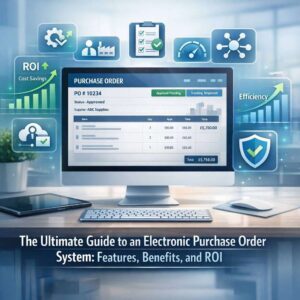
The procurement landscape is increasingly digital, and a robust electronic purchase order system (PO system) is central to modern purchase management. Whether you are a small business or a multinational organisation, adopting a purchase ordering system can streamline processes, reduce errors, and provide real-time visibility across suppliers and departments. This guide explores the essential features, tangible benefits, and the return on investment (ROI) you can expect from implementing a PO system software solution.
In this article, we’ll cover why organisations choose online purchase order systems, how they integrate with existing financial and ERP ecosystems, and best practices to maximise value. We will use practical examples and UK-centric considerations to help you evaluate options such as purchase ordering software, electronic PO systems, and related solutions.
What is a purchase order system?
A purchase order system is a software solution designed to manage the end-to-end lifecycle of purchasing. It covers requisition creation, approval workflows, supplier sourcing, order packaging, dispatch confirmations, invoicing, and payment reconciliation. A comprehensive PO system software supports standard purchase ordering practices, enforces policy compliance, and provides auditable records for internal control and external audits.
Key features to look for include configurable approval workflows, supplier master data management, catalogue integration, and real-time status tracking. An effective electronic purchase order system should also offer seamless integration with accounting systems, ERP, and procurement analytics dashboards, whether you operate in the UK or internationally.
An electronic purchase order system streamlines procurement by automating approvals, routing, and tracking, reducing manual errors and accelerating cycle times. It integrates with accounting and ERP workflows, providing visibility from requisition to payment. For more insights, explore https://www.quadient.com/en-gb/ap-automation/purchase-orders and learn how digital PO management can boost efficiency. Implementing an electronic purchase order system supports compliance, supplier relations, and spend control across departments.
Core features of an effective PO system
- Requisition capture and approval workflows: Users can raise purchase requests, which route through customisable approval chains based on spend thresholds or departmental rules.
- Supplier and contract management: Maintain up-to-date supplier information, contract terms, and preferred pricing to streamline sourcing.
- Catalogue and item management: Link items to supplier catalogues or price lists to automate line items and reduce data entry.
- Electronic purchase orders and order amendments: Generate, transmit, and track PO quantities, delivery dates, and change orders with complete audit trails.
- Receiving, goods receipt, and discrepancy handling: Validate deliveries against POs, record deviations, and trigger related workflows.
- Invoicing and payment reconciliation: Auto-match supplier invoices to POs, flag discrepancies, and streamline payments.
- Compliance and policy enforcement: Enforce procurement policies, approval thresholds, and regulatory controls.
- Reporting and analytics: Real-time dashboards, spend analytics, supplier performance, and cycle time metrics.
- integrations: Connect with ERP, accounting software, e-invoicing platforms, and third-party procurement tools.
- mobility and user experience: Intuitive interfaces, mobile access, and offline capabilities for purchase requests in remote sites.
Benefits of implementing a purchase ordering system
- Cost control and spend visibility: A PO system enforces spend limits, reduces maverick buying, and provides granular spend analytics to identify savings opportunities.
- Process efficiency and cycle time reduction: Automated workflows minimise manual routing, duplicate data entry, and delays related to paper-based processes.
- Improved accuracy and compliance: Standardised data, real-time status updates, and auditable records help mitigate errors and support regulatory requirements.
- Better supplier relationships: Transparent ordering processes, timely communications, and accurate forecasting improve supplier collaboration and terms negotiations.
- Cash flow and payment efficiency: Streamlined invoicing and PO-based payment reconciliation enhance supplier cash flow and reduce late payments.
- Auditability and control: Centralised documentation supports internal audits and governance, including compliance with financial controls and purchasing policies.
ROI considerations for UK organisations
- Time savings translate to lower administrative costs: Evaluate current cycle times from requisition to payment and estimate the impact of automation on headcount and efficiency.
- Reduction in maverick spend: A well-configured PO system reduces spontaneous purchasing and aligns with negotiated contracts, delivering measurable savings.
- Error reduction and fraud mitigation: Automated PO-to-invoice matching lowers the risk of duplicate payments and invoice mismatches.
- Supplier performance and discount opportunities: Transparent data helps negotiate better terms and take advantage of early payment discounts.
- Implementation and total cost of ownership (TCO): Consider licence models (per user, per PO, or enterprise), migration effort, integration costs, and ongoing support. UK-specific considerations include data localisation, GDPR compliance, and VAT handling.
Selecting the right system for your organisation
- Assess requirements: Map current procurement processes, including requisition workflows, approval hierarchies, and integration needs (ERP, accounting, payroll).
- Evaluate deployment options: On-premises versus cloud-based solutions, including the benefits of an online purchase order system for scalability and remote access.
- Consider UK-specific features: Language and currency support, VAT treatment, and UK supplier onboarding processes.
- Review integration capabilities: Ensure seamless data exchange with your existing po system software, procurement software UK, and financial platforms.
- User adoption and change management: Prioritise intuitive interfaces, mobile capabilities, and training resources to maximise value from day one.
- Security and compliance: Demand role-based access, audit trails, and encryption to protect sensitive procurement data.
FAQ: Electronic Purchase Order System
What is an electronic purchase order system?
An electronic purchase order system is a digital solution that automates the creation, approval, transmission, and tracking of purchase orders (POs). It replaces manual paper-based processes with electronic workflows, helping organisations manage supplier relationships, control spend, and improve procurement efficiency.
What are the main components of an electronic PO system?
- PO creation module: templates and forms to generate POs
- Workflow and approvals: routing rules, approver hierarchies, and escalation
- supplier management: supplier catalog, onboarding, and onboarding validation
- electronic transmission: e-invoice/ePO formats, integration with e-procurement networks
- PO tracking and analytics: status visibility, spend analytics, and reporting
- integration layer: ERP, accounting, inventory, and CRM systems
How does an electronic PO system improve procurement efficiency?
- Reduces manual data entry and errors
- Speeds up PO approval cycles with built-in routing and alerts
- Enables real-time status tracking and notifications
- Improves spend visibility and control through centralised data
- Streamlines supplier onboarding and contract compliance
What are common features to look for when selecting a system?
- Seamless ERP and accounting integrations
- Robust approval workflows and escalation rules
- EDI or API-based supplier connectivity
- Versioning, audit trails, and change management
- Compliance controls (tax, regulatory, contract terms)
- Security features (role-based access, encryption, MFA)
- Mobile access and user-friendly interface
- Reporting and analytics dashboards
- Bulk PO creation and catalog management
Is an electronic PO system suitable for small businesses?
Yes. Many vendors offer scalable plans tailored to small and midsized businesses, with simplified setups, affordable monthly subscriptions, and cloud-based access. Even basic automation can yield meaningful savings in administrivia and supplier lead times.
How does electronic transmission of POs work?
POs can be transmitted electronically via formats like XML, EDI, or standardised API calls. Some systems use supplier portals or email integration. The goal is to send POs directly to suppliers in a machine-readable form, reducing manual handling and improving receipt accuracy.
What are the benefits for suppliers?
- Faster PO receipt and acknowledgement
- Clear, standardised PO data reduces errors
- Real-time order status updates
- Improved payment accuracy and reconciliation
- Better contract and pricing compliance
How secure is an electronic PO system?
Security typically includes:
- Role-based access control and MFA
- Encryption in transit and at rest
- Audit trails and version history
- Secure integrations via APIs and gateways
- Regular security assessments and compliance with standards (e.g., SOC 2, ISO 27001)
What is the total cost of ownership?
Costs typically include:
- Software licensing or subscription fees
- Implementation and data migration
- Integration with ERP/other systems
- Training and change management
- Maintenance, support, and updatesTotal cost varies by deployment (cloud vs. on-premises), user count, and customisation needs.
How long does it take to implement an electronic PO system?
Implementation timelines vary (a few weeks to several months) depending on:
- Scope (number of departments, suppliers, catalogs)
- Data migration complexity
- Custom workflows and integrations
- Change management and user training
Can I integrate with my existing ERP or accounting system?
Yes. Most electronic PO systems offer native integrations or APIs to connect with common ERPs and accounting platforms, enabling seamless data flow for POs, receipts, and payments.
How does an electronic PO system handle approvals?
Approval workflows can be configured by:
- Approver roles and hierarchies (department head, budget owner, etc.)
- Spend thresholds and routing rules
- Time-based escalations and reminders
- Conditional approvals based on supplier, category, or contract terms
What is the difference between a PO and an e-invoice?
- Purchase Order (PO): A document issued to authorise a purchase and specify terms.
- E-invoice: An electronic invoice sent by the supplier with details of the delivered goods/services for payment.An integrated system often handles both to simplify procurement-to-payment processes and reconciliation.
Do I still need a contract or catalog management?
Yes. Integrating contract and catalog management helps enforce pricing, terms, and preferred vendors, ensuring POs align with negotiated agreements and reducing maverick spending.
How do I train my team to use an electronic PO system?
- Define clear processes and roles
- Provide role-based training sessions (requesters, approvers, vendors)
- Create quick-start guides and video tutorials
- Run a pilot program to gather feedback
- Offer ongoing support and refresher sessions
What are best practices for rollout?
- Start with a pilot group and a limited supplier set
- Map current processes and identify automation opportunities
- Establish data quality standards (supplier master, item master)
- Define governance, change management, and KPIs
- Plan for phased expansions and continuous improvement
How is data quality managed in an electronic PO system?
- Standardized supplier and item masters
- Validation rules at creation and during transmission
- Deduplication and data cleansing processes
- Regular data quality audits and user feedback loops
What about compliance and audit trails?
Electronic PO systems typically log all actions with timestamps, user IDs, and rationale. This creates a defensible audit trail for procurement governance, compliance reviews, and internal/external audits.
Can I customise reporting and analytics?
Yes. Most systems offer configurable dashboards, standard and ad hoc reports, and data export options to help you monitor spend, supplier performance, cycle times, and budget adherence.
How do I handle supplier onboarding?
- Collect essential information (certifications, tax details, banking info)
- Validate eligibility and compliance
- Enable supplier catalog setup and ePO transmission
- Provide training or onboarding materials for suppliers
What should I do if I have existing POs or historical data?
Most systems support data migration from legacy tools. Plan data mapping, cleansing, and validation to ensure a smooth transition and preserve historical records.
Are there any privacy or regulatory considerations?
Yes. Ensure compliance with data protection regulations (e.g., GDPR, CCPA) and industry-specific requirements. Review data retention policies and access controls within the system.
If you’d like, tell me your industry, company size, and current pain points, and I can tailor this FAQ to fit your specific use case.
Implementation best practices
- Start with a phased rollout: Begin with core PO processing for one department or category to validate workflows and measure early gains before scaling.
- Standardise data: Clean supplier records, pricing, and catalogue data to maximise automation accuracy.
- Define and document policies: Establish spend thresholds, approval routes, and receiving procedures to ensure consistent practice across the organisation.
- Plan for integration: Align data models with ERP and accounting systems to enable seamless PO, receiving, and invoicing workflows.
- Monitor and optimise: Use analytics to identify bottlenecks, supplier performance issues, and opportunities for policy refinement.
An electronic purchase order system transforms procurement by automating requisitions, approvals, and supplier communications, reducing cycle times and manual errors. It centralizes order data, improves visibility, and strengthens audit trails for compliance. Businesses gain real-time tracking, streamlined workflows, and scalable processes that adapt to growing demand. Implementing this technology enhances spend control and supplier collaboration, driving efficiency across departments. For more information, visit cloudb2b.co.uk.
An electronic purchase order system streamlines procurement by digitizing requisitions, approvals, and confirmations, reducing manual errors and cycle times. It integrates supplier catalogs, budgets, and compliance checks, ensuring accurate data and auditable trails. This approach enhances visibility, controls costs, and accelerates workflows across departments. For detailed guidance on creating purchase orders within modern platforms, refer to the following resource: https://learn.microsoft.com/en-us/dynamics365/supply-chain/procurement/tasks/create-purchase-order.
Measuring success and continuing improvement
- Key metrics: Purchase order cycle time, maverick spend percentage, on-time deliveries, invoice processing time, and discount capture rate.
- ROI indicators: Cost reductions, headcount efficiency, improved cash flow, and supplier performance improvements.
- Continuous improvement: Regularly revisit policies, supplier catalogues, and automation rules to sustain gains and adapt to business changes.
Industry considerations and best-fit scenarios
- Manufacturing and distribution: Fast-moving procurement cycles benefit heavily from automation and supplier collaboration features.
- Professional services: Streamlined one-off and recurring purchases can dramatically reduce time spent on administrative tasks.
- Public sector and regulated industries: Strong emphasis on compliance, auditability, and policy enforcement.
Final thoughts
An electronic purchase order system—whether described as a po system, purchase ordering system, or online purchase order system—represents a strategic investment in procurement maturity. By combining robust features with careful implementation and ongoing optimisation, organisations can realise meaningful ROI through cost savings, efficiency gains, and stronger supplier relationships. For UK organisations, selecting a purchase order software that aligns with local regulatory requirements and UK business practices is essential to unlock the full value of modern procurement technology.