
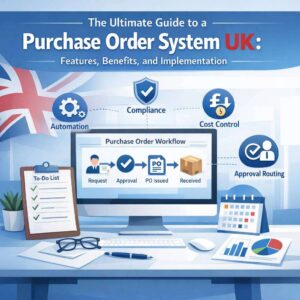
A reliable purchase order system UK can streamline procurement, cut delays, and improve finance visibility for growing businesses. By adopting a centralized PO workflow, teams gain real-time tracking, standardized approvals, and better supplier relationships. For guidance on managing orders efficiently, visit https://businessservices.wisc.edu/purchasing/managing-your-order/ and explore practical resources. Implementing a robust PO system UK reduces errors, boosts compliance, and enhances cash flow while supporting strategic purchasing decisions across departments.
A purchase order (PO) system is a cornerstone of modern procurement, enabling organisations to manage spend, control supplier relationships, and streamline workflows from requisition to payment. In the United Kingdom, where compliance, auditable trails, and value for money are paramount, adopting an effective online purchase orders solution can transform purchasing processes. This guide outlines the essential features, the tangible benefits, and practical steps for implementing a robust PO system software.
Features of a modern PO system software
A comprehensive PO system software covers the end-to-end procure-to-pay lifecycle. Core features typically include requisition creation and approval routing, where staff can raise requests that are automatically reviewed according to defined thresholds and authorisation hierarchies. The system should offer a central catalog or master data management, linking suppliers, products, and prices to ensure consistency and reduce maverick buying. An electronic purchase order system enables POs to be generated, issued, and tracked in real time, including status updates, amendment history, and delivery notes.
Automation and workflow intelligence are critical. Automated PO generation for recurring orders, against contracted terms, can save significant time. Automated three-way matching aligns requisition, PO, and supplier invoice data, reducing disputes and catching discrepancies before payment. Integration with accounting, ERP, and finance systems is essential, ensuring PO data flows seamlessly into ledgers, management accounts, and VAT reporting. Compliance features, such as audit trails, user activity logs, and role-based access, help organisations meet regulatory requirements and internal controls.
Supplier management remains vital. A PO system software should support onboarding, due diligence, and performance tracking, including supplier scorecards and ongoing risk assessment. Electronic PO delivery to suppliers via secure channels—email, SFTP, or supplier portals—enhances reliability and visibility. The ability to convert requisitions directly into purchase orders, and to approve POs from mobile devices, improves responsiveness and user adoption. For UK organisations, native support for VAT handling, purchase tax rules, and the ability to generate compliant procurement documents is important.
Reporting and analytics empower procurement teams. Dashboards should offer spend analysis, supplier performance, cycle times, and compliance metrics. Customisable reports and ad hoc queries help pinpoint savings opportunities and justify procurement decisions. A robust online purchase orders capability also supports budget control by tying POs to departmental budgets and available funds, providing alerts when limits are approached or exceeded.
Security and data protection are non-negotiable. Modern po system software employs encryption, secure access, and regular backups. Data residency considerations may apply for UK organisations, particularly for public sector or regulated industries. Cloud-based solutions offer scalability, automatic updates, and disaster recovery, while on-premises deployments may still be relevant for certain compliance regimes.
Interoperability is another key feature. The ability to exchange data with ERP, procurement portals, and supplier systems through standard formats such as XML, EDI, or API connections reduces manual data entry and errors. A well-designed user interface supports ease of use, enabling requisitioners, approvers, and finance teams to navigate tasks efficiently.
A robust purchase order system uk can streamline procurement, improve visibility, and reduce errors across your organization. Businesses adopting best practices see faster approvals and better spend control. For more insights and tools, explore the following resource in the second half: https://www.shift4shop.com/lp/ecommerce-university/po-purchase-order-system/
Benefits of adopting an online purchase orders system
The primary benefit of implementing an online purchase orders system is tighter control over expenditure. By standardising requisition, approval, and ordering, organisations can enforce policy compliance and reduce maverick spending. The automation of PO creation, approval routing, and three-way matching lowers manual workload, accelerates cycle times, and frees procurement professionals to focus on strategic initiatives such as supplier rationalisation and category management.
Improved supplier relationships stem from clearer communication and reliable ordering processes. Electronic PO transmission reduces the risk of lost orders and delays, while status visibility helps suppliers plan capacity and fulfilment. Invoicing accuracy improves through accurate PO data, reducing invoice discrepancies and processing time. A streamlined procure-to-pay workflow supports faster supplier payments where terms are favourable, contributing to stronger supplier partnerships and potential discounts.
Data integrity and auditability are strengthened through comprehensive record-keeping. An auditable trail of requisitions, POs, amendments, and approvals supports governance and regulatory compliance. For organisations in regulated sectors, the ability to demonstrate controls and financial discipline is a competitive differentiator. The scalability of a software for purchase order system means growing teams or evolving procurement needs can be supported without compromising efficiency or control.
Operational efficiency also translates into measurable cost savings. By consolidating procurement across departments, organisations gain better visibility into spend patterns, enabling bulk purchasing, better contract utilisation, and supplier consolidation. The ability to generate insights through robust reporting underpins evidence-based decision-making and supports budgeting accuracy.
FAQ: Purchase Order System UK
What is a purchase order system and why do UK businesses use it?
A purchase order system is a digital process for creating, approving, and tracking purchase orders (POs). UK businesses use it to control spend, ensure accuracy, maintain audit trails, and streamline supplier procurement from sourcing to payment.
How does a purchase order system help with compliance in the UK?
It enforces standardised workflows, stores immutable PO records, and supports VAT receipts and audit requirements. Many systems offer built-in VAT handling, digital signatures, and approval routing that align with UK regulatory expectations.
What features should I look for in a UK-focused PO system?
- PO creation and editing with multiparty approval
- Supplier catalogues and e-procurement
- VAT handling and tax reporting
- Invoice matching (3-way: PO, receipt, invoice)
- Bank reconciliation and payment integration
- Cloud accessibility and data security
- Integration with accounting and ERP software popular in the UK (e.g., Sage, Xero, QuickBooks)
Can a PO system integrate with UK accounting software?
Yes. Look for native integrations or robust APIs with popular UK software such as Xero, Sage, QuickBooks, Netsuite, and ERP systems. This ensures seamless data flow between procurement and accounting.
How do I justify cost and ROI for a PO system in the UK?
Calculate time saved on manual purchases, reduced maverick spend, fewer invoice discrepancies, and improved supplier terms. Estimate implementation costs, ongoing subscription fees, and the reduction in processing days to understand the payback period.
Is a cloud-based PO system suitable for UK businesses?
Yes. Cloud solutions offer scalability, remote access, automatic updates, and disaster recovery. Ensure data sovereignty and compliance with GDPR, and confirm data centers meet UK/EU standards if that matters for your organization.
How does a PO system handle VAT and invoicing in the UK?
A good system applies VAT rules automatically, supports VAT-efficient workflows, and ensures VAT is correctly captured on POs and invoices. It should generate VAT-compliant purchase invoices and provide VAT reporting-ready data.
Can a PO system help with supplier management in the UK?
Absolutely. It centralises supplier records, tracks supplier performance, maintains approved supplier lists, and supports electronic tendering and catalogues for better supplier collaboration.
What is the typical implementation timeline for a PO system in the UK?
Implementation timelines vary by vendor and scope but typically range from 4 to 12 weeks for core features, with additional time for integrations, data migration, and user training.
Do UK businesses need training to use a PO system?
Yes. Training helps users adopt the workflow, reduce errors, and maximise ROI. Look for vendor-provided onboarding, ongoing support, and role-based training materials.
Are there industry-specific PO solutions for the UK?
Yes. Some solutions offer industry templates for sectors like manufacturing, retail, healthcare, and public sector procurement, with configurable approval hierarchies and compliance settings.
How secure are PO systems, and what security standards should I expect?
Expect in-transit and at-rest encryption, role-based access control, multi-factor authentication, activity logs, and regular security audits. GDPR compliance and data protection measures are essential.
Can a PO system support multi-country procurement from the UK?
Many systems support multi-currency, multi-language catalogs, and regional supplier networks, enabling UK-based organisations to procure globally while maintaining UK-specific controls.
What is the difference between a PO system and an e-procurement platform?
A PO system focuses on purchase order creation, approval, and tracking, while e-procurement platforms often include broader sourcing, supplier discovery, catalog management, and advanced analytics. Many solutions combine both functions.
How do I choose the right PO system for my UK business?
- Assess your procurement volume and complexity
- Check for UK VAT and tax compatibility
- Evaluate integration options with your existing accounting/ERP
- Consider user adoption, training, and support quality
- Compare total cost of ownership and scalability
- Request a trial or pilot implementation
Do I need to migrate existing POs when switching systems?
Often yes. A migration plan should map existing POs, supplier data, and receipts to the new system. Verify data compatibility and data cleansing requirements with the vendor.
How can I measure PO system success post-implementation?
Track metrics such as purchase spend under control, PO cycle time, invoice processing time, maverick spend, payment accuracy, supplier performance, and user adoption rates.
If you’d like, I can tailor these FAQs to your specific industry, company size, or preferred UK vendors.
Implementation considerations for UK organisations
Successful adoption starts with a clear business case and executive sponsorship. Define objectives, expected benefits, and success metrics, such as cycle time reduction, maverick spend percentage, or days payable outstanding. Map current processes and identify bottlenecks that the PO system software should address. Involve key stakeholders from procurement, finance, and IT to ensure requirements are comprehensive and realistic.
Data readiness is critical. Prepare supplier master data, catalogue items, pricing, and contract terms. Ensure data quality to maximise the effectiveness of online purchase orders. Planning for change management is essential; provide training, user guides, and ongoing support to achieve high user adoption rates. A phased rollout—starting with a controlled pilot before a broader deployment—can mitigate risk and demonstrate early value.
Security and compliance considerations should be addressed early. Confirm data residency or cloud hosting preferences, ensure robust authentication, and align with UK data protection and VAT rules. Establish clear governance for approving authorities, exception handling, and escalation paths.
Vendor selection for a po system software should prioritise a proven track record in the UK market, strong integration capabilities, and dedicated customer support. Evaluate total cost of ownership, including licensing, implementation, data migration, and ongoing maintenance. Request demonstrations and reference sites to assess usability and real-world performance. Consider whether the software for purchase orders supports online purchase orders, offers a supplier portal, and provides mobile accessibility to accommodate diverse working patterns.
In sum, a mature online purchase orders system and its associated electronic purchase order system capabilities deliver substantial advantages for UK organisations. From tighter control over spend and enhanced supplier collaboration to improved data integrity and faster processing, the right PO system software can transform procurement into a strategic driver of value. As businesses continue to optimise their procurement ecosystems, selecting a flexible, scalable, and compliant solution—whether cloud-based or hybrid—will position organisations to realise enduring benefits across the financial cycle.
A robust purchase order system UK solutions streamline procurement, automate approvals, and improve financial control for growing businesses. Integrating scalable workflows and real-time tracking can reduce errors and save time. Discover more at https://cloudb2b.co.uk/.
A robust purchase order system uk streamlines procurement, approvals, and budgeting for UK businesses, ensuring compliance and cost control. Explore efficient procurement workflows and modern features that support growth. For more resources, visit https://www.umsystem.edu/oei/sharedservices/apss/po_vouchers.