Purchase Order Software: A Foundation for Modern Operations
In today’s fast-moving markets, organisations rely on precise control of procurement to keep production lines running and customer promises intact. A robust purchase order software solution helps translate strategic intent into tangible, actionable transactions. By standardising how orders are created, approved, and tracked, a purchase ordering system reduces variability, minimises errors, and provides real-time visibility across multiple departments and suppliers. The net effect is a smoother flow of materials, more accurate budgeting, and improved supplier relationships.
Digital Purchase Order Software: Real-Time Transparency
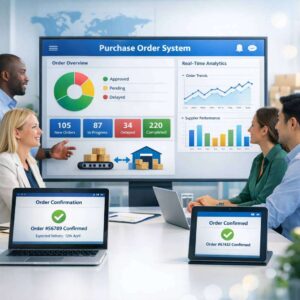
Digital purchase order software delivers end-to-end visibility into the procurement cycle. Rather than circulating paper-based forms or unstructured emails, teams create purchase orders within a central, auditable platform. Stakeholders can view status updates, expected delivery dates, and any exceptions as they arise. This real-time transparency enables proactive exception management, reducing backward-and-forward communications and expediting approvals. For organisations seeking leaner processes, digital PO systems also integrate with invoicing and payment workflows, extracting data from purchase orders to streamline downstream finance functions.
Purchase Order Management System: Governance, Compliance, and Control
A well-implemented purchase order management system enforces governance while offering flexibility for diverse supplier setups. Before purchase orders are issued, organisations can configure approval hierarchies, budget checks, and rule-based routing to ensure compliance with internal policies and external regulations. The system records a clear audit trail, showing who created, modified, and approved each order, along with timestamps. This level of governance is invaluable for audits, governance reporting, and cost control, particularly in regulated industries or organisations with multi-country operations and varying supplier terms.
FAQ: Purchase Ordering System
What is a purchase ordering system?
A purchase ordering system is a software or digital process that manages the creation, approval, tracking, and fulfillment of purchase orders (POs) within an organisation. It helps standardise procurement workflows, reduces manual errors, and provides visibility into spending.
Why should my business use a purchase ordering system?
Benefits include:
- Streamlined procurement processes and faster PO approvals
- Improved accuracy and reduced manual data entry
- Better budget control and spend visibility
- Audit trails for compliance and reporting
- Enhanced supplier management and repeat ordering
What features should I look for in a purchase ordering system?
Key features to consider:
- PO creation and editing with templates
- Workflow approvals and routing rules
- Supplier management and master data
- Budget checks and spend controls
- E-signatures and audit trails
- Integration with ERP, accounting, and inventory systems
- Receipt and goods receipt tracking
- Reporting and analytics
- Notifications and collaboration tools
- Mobile access and user permissions
How does a purchase order differ from an invoice?
A purchase order is a formal request to buy goods or services sent to a supplier. An invoice is a request for payment issued by the supplier after goods or services are delivered. The PO helps authorise spend; the invoice triggers payment.
What are the typical steps in a purchase order workflow?
Common steps:
- Requisition and PO creation
- Managerial approval
- Budget validation
- PO dispatch to supplier
- Order acknowledgment
- Goods or services receipt
- Match with supplier invoice (three-way match)
- Payment processing
- Reporting and analytics
Can a purchase ordering system integrate with my existing tools?
Yes. Many systems integrate with ERP, accounting software, inventory management, CRM, and e-procurement networks. Look for API access, standard connectors, and data mapping capabilities.
How can a purchase ordering system improve cost control?
It enforces spend limits, enforces required approvals, standardises supplier terms, provides real-time spend visibility, and enables spend analytics. This helps prevent maverick buying and duplicate orders.
Is a purchase ordering system suitable for small businesses?
Yes. Many solutions scale from small teams to enterprise needs. Look for modular plans, affordable per-user pricing, cloud deployment, and easy onboarding designed for smaller procurement teams.
What about compliance and audits?
A good system maintains full audit trails, version history, approval records, and policy enforcement. It simplifies external audits and internal governance by providing traceable procurement data.
How do I choose the right solution for my organisation?
Consider:
- Size of your procurement team and PO volume
- Required integrations
- Industry-specific compliance needs
- Ease of use and training time
- Total cost of ownership (subscription, implementation, maintenance)
- Security, data residency, and access controls
- Vendor support and roadmap
What is the implementation timeline like?
Implementation timelines vary by scope. A basic deployment can take a few weeks, while full ERP-integrated deployments may take several months. Plan for discovery, data migration, configuration, user training, and change management.
Do I need training to use a purchase ordering system?
Yes. Training helps users create POs correctly, follow approval workflows, and leverage reporting features. Look for vendor-provided training resources, onboarding services, and user documentation.
How secure are purchase ordering systems?
Security varies by vendor but typically includes role-based access control, data encryption at rest and in transit, regular security assessments, and compliance with standards (e.g., SOC 2, ISO 27001). Ensure you review your data security requirements.
Can I try a purchase ordering system before buying?
Many vendors offer free trials, demos, or sandbox environments. Take advantage of these to assess usability, integration ease, and whether it fits your processes.
What is the return on investment (ROI) for a purchase ordering system?
ROI comes from reduced manual work, fewer errors, faster approvals, better supplier terms, and improved visibility into spend. Measure before/after metrics like PO cycle time, maverick spending, and processing costs.
How do I migrate data from our current system?
Data migration typically involves exporting existing PO templates, supplier master data, and approval rules, mapping fields to the new system, cleansing duplicates, and validating imports. A vendor may assist with migration services.
Can a purchase ordering system handle multi-location or multi-currency environments?
Yes, many systems support multi-location procurement and multi-currency transactions, along with centralised controls and consolidated reporting.
What are common implementation pitfalls to avoid?
- Inadequate stakeholder involvement
- Underestimating data migration effort
- Overcustomization
- Poor change management and training
- Missing or unclear approval workflows
- Incomplete master data (suppliers, items, terms)
If you’d like, tell me your industry, team size, and current tools, and I can tailor recommendations or help you compare specific vendors.
A robust purchase ordering system streamlines procurement, reduces maverick spend, and ensures accurate supplier data. Businesses increasingly adopt automated workflows to control approvals, track cycles, and improve budgeting. https://www.avidxchange.com/products/avidbuy/ By integrating with ERP and accounting, teams accelerate purchases and achieve measurable cost savings.
A purchase ordering system streamlines procurement processes, improving accuracy, traceability, and supplier collaboration across departments. By automating requisitions, approvals, and invoicing, teams save time and reduce errors, while gaining real-time visibility into spend. When selecting a solution, consider scalability, integration with ERP, and user-friendly interfaces. For more insights on implementing this technology, explore practical guidance and industry perspectives at https://www.fraxion.biz/blog/po-system.
Online Purchase Orders: Speed and Accessibility
The rise of online purchase orders has transformed procurement from a back-office function into a dynamic, accessible process. Stakeholders can raise requests, compare supplier terms, and submit orders from any location and device. Online purchase orders reduce cycle times by enabling instant access to approved templates and catalogues, supporting line-of-business users who are not procurement specialists. For small and mid-sized businesses, online access levels the playing field, enabling rapid onboarding of new users and scalable procurement without overwhelming administrative teams.
Po System for Small Business: Scalable Efficiency
A po system for small business must balance affordability with powerful functionality. Modern solutions deliver essential capabilities—clear PO creation, supplier management, budget checks, and approvals—without imposing complexity. The right po system for small business grows with you, offering modular features that can be enabled as procurement needs evolve. Cloud-based options provide predictable costs, automatic updates, and minimal on-premises maintenance, ensuring that smaller organisations can achieve enterprise-level control without a prohibitive investment.
Purchase Ordering Software: Streamlining Requisition-to-Pay
Purchase ordering software brings together requisitioning, approval, order placement, and supplier interaction into a cohesive workflow. By linking each stage—from requisition through order acknowledgement to delivery and receipt—teams can record performance metrics that drive continuous improvement. The software can automatically generate purchase orders from approved requisitions, apply preferred supplier terms, and flag maverick buying. The end-to-end integration with accounts payable accelerates payments and improves cash flow forecasting, while maintaining a clear, central record of all procurement activity.
A robust purchase ordering system can streamline procurement, reduce manual errors, and improve supplier collaboration. By centralizing requisitions, approvals, and invoicing, teams gain real-time visibility into spend and inventory. Integrations with ERP and accounting modules ensure data accuracy and faster cycle times. To explore a scalable option, visit the leading platform and discover features designed for growing businesses. https://cloudb2b.co.uk/ Embrace automation to optimize purchasing workflows and drive cost savings across your organization.
Data-Driven Decision-Making: Analytics and Reporting
One of the strongest advantages of a purchase ordering system is its data assets. Every PO carries information about supplier performance, lead times, price variances, and delivery reliability. Analytics dashboards translate these data points into actionable insights, supporting strategic supplier negotiations and sourcing decisions. Regular reporting helps procurement leaders identify bottlenecks—such as chronic late deliveries or recurring budget overruns—and implement corrective measures. In a culture of continuous improvement, data-driven procurement becomes a competitive differentiator.
Integration with Supply Chain Telematics
A modern po system software emphasises interoperability. Seamless integration with ERP, inventory management, warehouse management, and logistics systems ensures that procurement aligns with production planning and distribution. When purchase orders connect to stock levels and production schedules, organisations can avoid stockouts and overstock situations alike. Integrated systems also enable automated alerts for expiring contracts, price changes, or supplier risk indicators, further strengthening supply chain resilience.
Simplifying Compliance and Risk Management
Procurement risk is multifaceted, encompassing supplier concentration, regulatory changes, and price volatility. A robust purchase order system supports risk management by centralising supplier documentation, tracking contract terms, and enforcing policy-compliant ordering practices. Automated validation of supplier credentials, tax considerations, and incoterms reduces the likelihood of compliance gaps. By providing a consistent framework for supplier onboarding and ongoing performance review, organisations can mitigate risk while maintaining procurement agility.
Implementation Considerations: Getting It Right
For organisations evaluating a purchase ordering system, starting with a clear set of requirements is essential. Key considerations include:
- User access and approval workflows: Ensure the system reflects your organisational structure and approval thresholds.
- Supplier master data: Maintain accurate supplier profiles, price lists, and contract terms.
- Integration points: Confirm compatibility with existing ERP, invoicing, and inventory systems.
- Change management: Plan training and communications to drive user adoption and minimise disruption.
- Data migration: Prepare for clean data transfer from legacy systems to avoid downstream errors.
- Security and compliance: Align security controls with data protection regulations and industry standards.
A robust purchase ordering system can streamline procurement, control costs, and improve supplier relationships. It eliminates manual errors, speeds cycles, and provides clear approval workflows. Invest in automation to gain real-time visibility, track budgets, and boost compliance across departments. For deeper insights, explore this resource: https://planergy.com/blog/purchase-order-automation/
The Strategic Value of a Purchase Order System
Ultimately, a purchase order system is more than a digital filing cabinet. It is a strategic enabler that aligns procurement activity with broader business goals: reducing operating costs, improving lead times, and enabling better supplier collaboration. By standardising processes, providing real-time visibility, and delivering actionable insights, a PO system software equips organisations to respond to market dynamics with speed and confidence.
If you are considering upgrading your procurement capabilities, evaluate solutions that offer clear procurement templates, scalable approval workflows, and strong reporting capabilities. The right purchase ordering software should not merely automate tasks; it should elevate procurement as a strategic partner within the supply chain, capable of driving efficiency, resilience, and value across the organisation.